You paid for this once already.
Somebody stood in your driveway, told you this was the last time you would think about your eavestroughs, and fitted a guard over the top of them. Two or three winters later the water is coming over the front edge again, there is a stain down the siding, and the company that fitted it either does not answer or wants to sell you a cleaning.
That is the most common conversation we have. It is worth being clear about what actually went wrong, because it is almost never the thing people assume.
See every style of guard sold in Ontario Have your roofline photographed free
Three ways a guard stops working.
Only one of these is really about the guard. The other two are about what was underneath it on the day it went on.
Plastic lattice, foam inserts and coarse expanded mesh all hold debris rather than shed it. Maple keys and pine needles sit in the aperture, seeds germinate in it, and within two seasons the guard is the blockage.
A run that no longer drops toward the downspout holds water no matter what is fitted on top of it. The guard hides the standing water instead of removing it, and in January that water is ice.
Guards add weight and load to a gutter. Fitted onto hangers that had already pulled away from the fascia, they accelerate exactly the sagging and separation the homeowner was trying to stop.
Nobody fixed the gutter first.
Almost every failed guard we take off was fitted to a gutter that was already failing. The run was not emptied properly, the corners and seams were not resealed, the pitch was never corrected and the hangers were left as they were. A cover went over the top of all of it.
A guard cannot correct a gutter. It can only sit on one. If the gutter underneath does not drain, nothing fitted above it will make it drain, and every dollar spent on the cover was spent on the wrong part of the problem.
Off, then right, then protected.
The old system comes off and leaves with us. Then the run gets the same five steps every Gutter Proof job gets, because the gutter is the part that has to work.
- Step 01
Clean
Everything comes out by hand, then the run is flushed until the downspout comes out clear.
- Step 02
Reseal
Every corner, end cap, seam and downspout collar is sealed. This is where an old gutter actually leaks.
- Step 03
Realign
Sagging sections come back to line and the whole run is set to a quarter inch of fall per ten feet.
- Step 04
Reinforce
New heavy duty hangers go in wherever the old ones pulled loose, before any weight goes on top.
- Step 05
Protect
Stainless steel micro-mesh goes on last, cut to your gutter profile and fastened down.
Every one of these was sold as permanent.
Mesh, lattice, perforated sheet, solid covers. Different names, different shapes, same outcome once the gutter under them gave up.
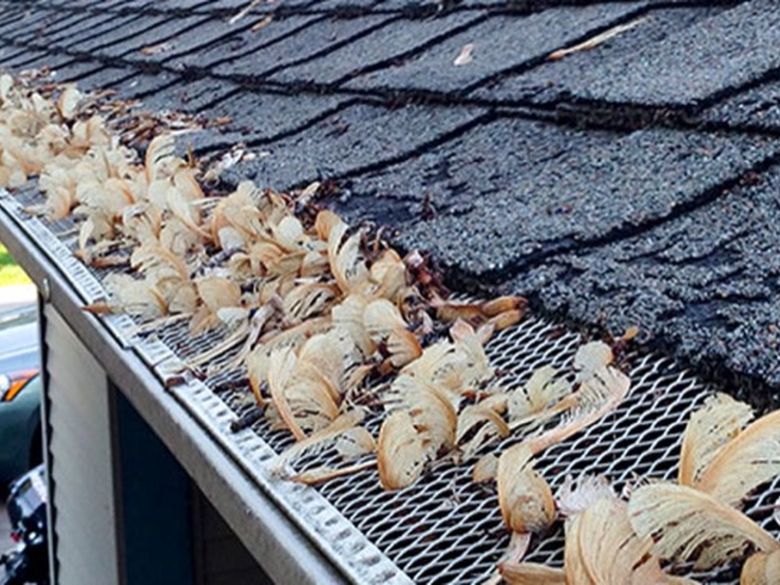
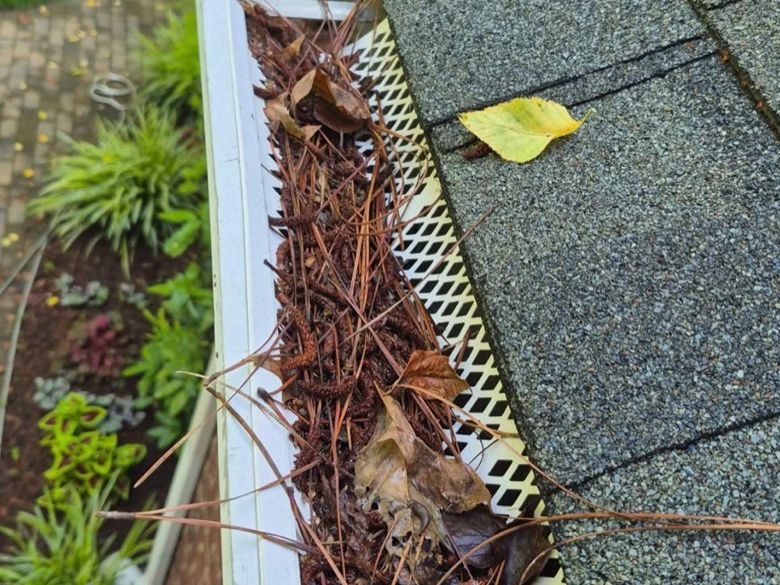
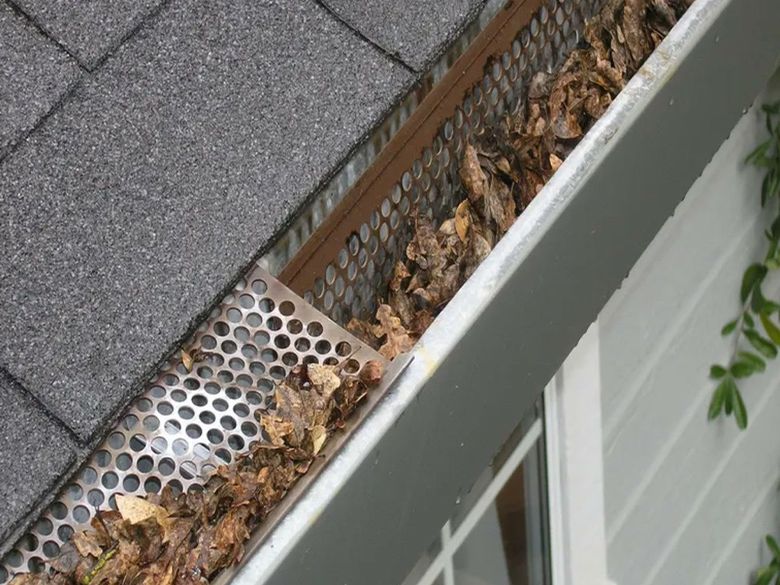
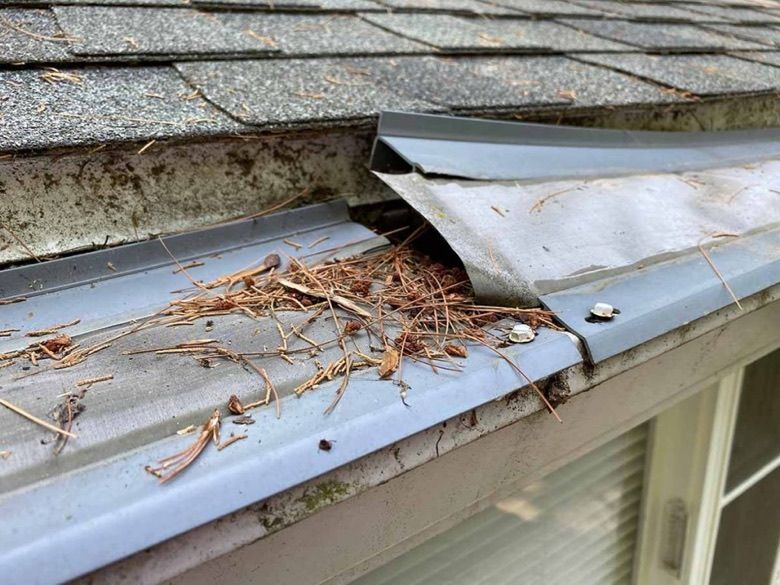
Stainless steel micro-mesh, on a gutter that was fixed first.
An extruded aluminum frame and a stainless steel micro-mesh. No plastic to go brittle, no lattice for a seed to root in, and nothing that has to come off again to be cleaned.
What we will not tell you.
That your guards are definitely the problem
Sometimes they are, and sometimes the guard is fine and the gutter behind it is beyond realignment. We do not know which one you have until the roofline has been photographed, and neither does anybody quoting you over the phone.
That this will never need looking at again
Debris sits on top of micro-mesh, dries out and blows off. That is how the material works. Under heavy tree cover, occasionally clearing the surface may still be worth doing. What stops is opening the gutter up twice a year to dig it out, and that is the promise we will actually put in writing.
That the number will change later
One price, quoted after the drone survey, with the photographs that produced it. No deposit, and payment is due when the work is finished. If the inspection shows your gutters need something other than what we sell, that is what we will say.
18 municipalities. One standard.
We replace failed gutter guards across Toronto and the GTA on the same terms everywhere on this map.
Find out why your gutter guards failed
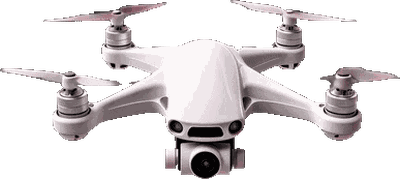
The drone flies your full roofline and photographs what is happening on top of, and underneath, the guards you already have. You get the images whether or not you go ahead, and they will show you exactly where the water is going.